
Breaking into digital marketing has never been more accessible or more competitive. With businesses investing over $600 billion globally in digital advertising, the demand for skilled marketers continues to grow. But how do you land your first role when every job posting seems to require experience?
After helping dozens of career changers transition into digital marketing and interviewing hiring managers across the industry, I’ve identified the exact strategies that work in 2026. This guide will show you the fastest, most effective path to launching your digital marketing career, even if you’re starting from zero.
Understanding Digital Marketing in 2026
Before diving into tactics, you need to understand what digital marketing actually entails today. Digital marketing encompasses all marketing efforts that use electronic devices or the internet. The field includes several core disciplines:
Search Engine Optimization (SEO) focuses on improving website visibility in organic search results. Pay-Per-Click Advertising (PPC) involves managing paid campaigns on platforms like Google Ads and Meta. Content marketing creates valuable content to attract and retain audiences. Social media marketing builds brand presence across platforms like Instagram, TikTok, and LinkedIn. Email marketing nurtures leads and customers through targeted campaigns. Analytics measures performance and derives actionable insights from data.
Most entry-level positions don’t require you to master all these areas. Instead, you’ll typically specialize in one or two while maintaining working knowledge of the others. The key is choosing your initial focus strategically.
Step 1: Choose Your Digital Marketing Specialization
The biggest mistake beginners make is trying to learn everything at once. Instead, pick one primary channel to master based on your interests and market demand.
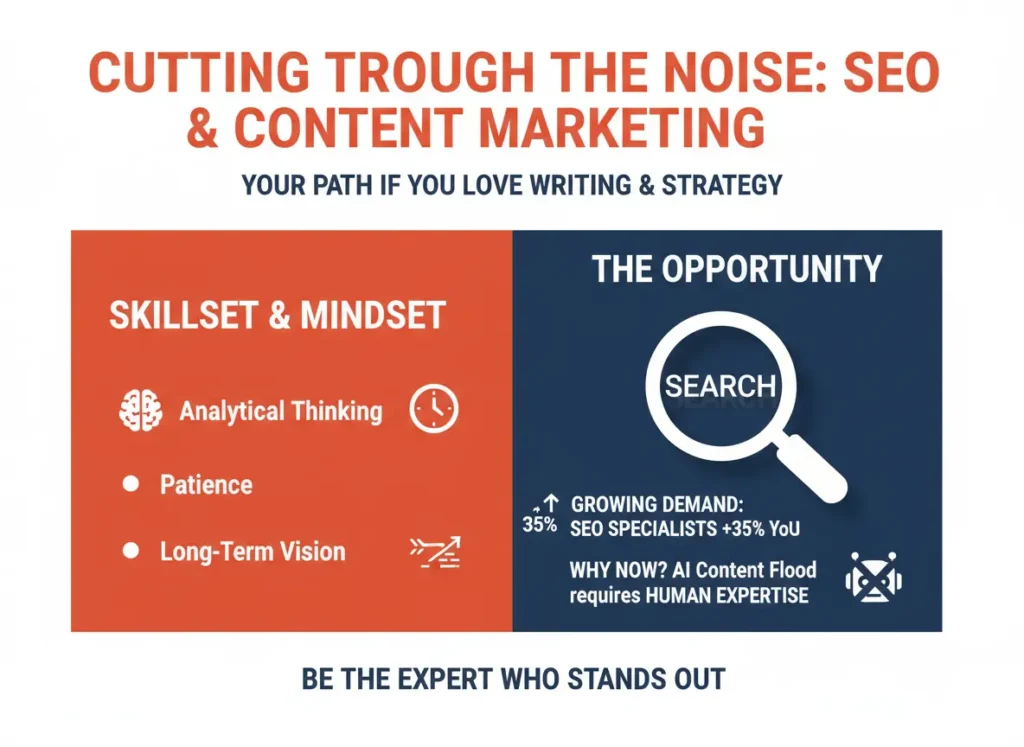
If you enjoy writing and long-term strategy, SEO and content marketing offer excellent entry points. These roles value analytical thinking and patience, as results take time to materialize. The demand for SEO specialists has grown 35% year-over-year as AI-generated content floods the internet and businesses need experts who can cut through the noise.
For those who love data and immediate results, PPC advertising provides a faster feedback loop. You’ll manage budgets, optimize campaigns, and see daily performance metrics. The learning curve is steep, but companies desperately need skilled PPC specialists who can maintain profitable return on ad spend.
Social media marketing suits creative individuals who understand cultural trends and community building. While this field is saturated at the entry level, specializing in emerging platforms or B2B social media can differentiate you. Email marketing remains one of the highest-ROI channels and is often overlooked by beginners, creating opportunities for those willing to master it.
Choose based on what genuinely interests you, not just what seems easiest. Your enthusiasm will fuel the hundreds of hours of learning ahead.
Step 2: Build Foundational Knowledge (The Right Way)
Forget expensive bootcamps or university degrees at least initially. The most successful digital marketers I know built their foundations through strategic self-education.
Start with Google’s free certifications, including Google Analytics, Google Ads, and Google Digital Garage. These certifications appear on countless job descriptions and cost nothing but your time. While they won’t make you an expert, they provide legitimate credentials and foundational knowledge that employers recognize.
HubSpot Academy offers excellent free courses in inbound marketing, content marketing, and social media. The certifications are respected industry-wide and the content is remarkably comprehensive. For SEO specifically, work through materials from Moz, Ahrefs Academy, and Search Engine Journal.
Here’s the critical part: don’t just watch videos and collect certificates. Spend 70% of your time doing actual marketing work and only 30% consuming educational content. Theory matters far less than demonstrated ability.
Step 3: Create Your Digital Marketing Portfolio
This step separates candidates who get interviews from those who don’t. You need proof you can deliver results, and you don’t need an employer to start building that proof.
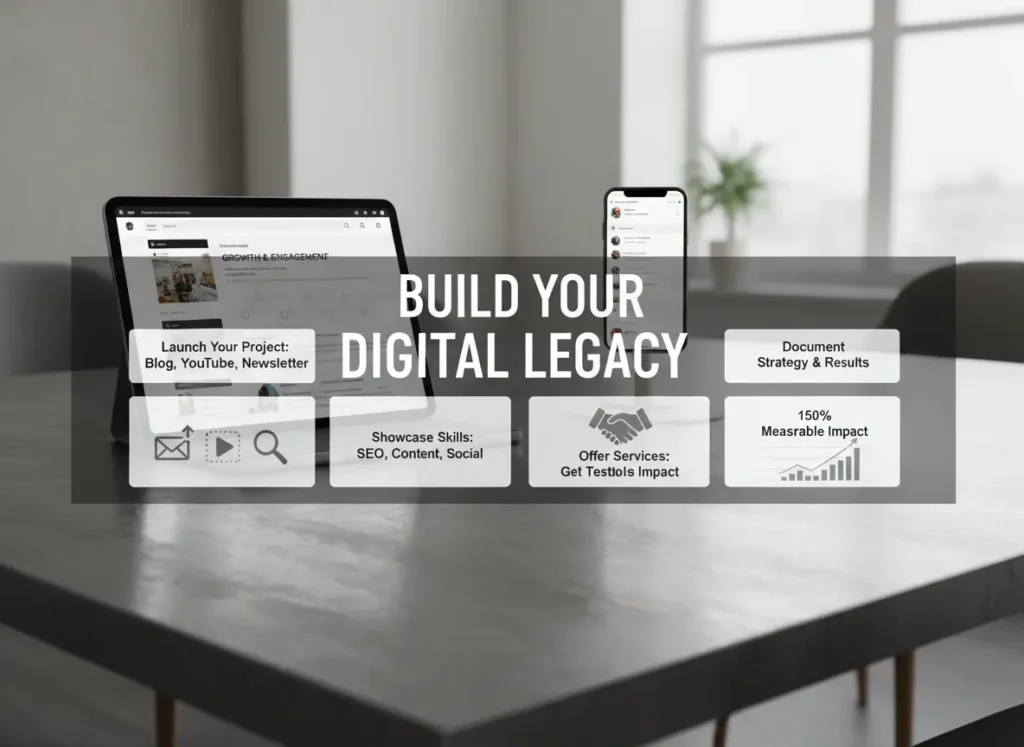
Launch your own project. Start a blog, YouTube channel, newsletter, or niche social media account. Choose a topic you’re genuinely interested in because you’ll be working on this for months. The subject matter is less important than your ability to demonstrate growth, engagement, and strategic thinking.
Document everything: your initial strategy, the tactics you implement, what works, what doesn’t, and how you optimize based on data. Even if you only grow to 500 email subscribers or 1,000 blog visitors monthly, you’ll have concrete examples of audience building, content creation, SEO implementation, or social media growth to discuss in interviews.
Offer free services strategically. Identify 2-3 small businesses or nonprofits that need digital marketing help. Don’t just volunteer randomly—choose organizations where you can make a measurable impact and where the owner will serve as a reference. Focus on quick wins like optimizing their Google Business Profile, launching a basic email nurture sequence, or improving their top-performing blog posts.
Set clear expectations, define specific deliverables, and document your results. A case study showing how you increased a local bakery’s website traffic by 150% or generated 50 qualified leads for a consulting firm speaks louder than any certification.
Step 4: Build Your Professional Online Presence
Your digital footprint is your resume in 2026. Before applying to jobs, ensure your online presence demonstrates marketing competence.
Optimize your LinkedIn profile for digital marketing keywords. Your headline shouldn’t say “aspiring digital marketer”—instead, use something like “Digital Marketing Specialist | SEO & Content Strategy.” Fill the featured section with your best portfolio pieces, case studies, and content samples.
Create content consistently on LinkedIn. Share insights from your learning journey, comment thoughtfully on industry discussions, and publish short posts analyzing marketing campaigns you admire. This positions you as someone actively engaged in the field, not just looking for a job.
Build a simple personal website that showcases your work. This doesn’t need to be fancy—a clean one-page site with your background, skills, portfolio projects, and contact information is sufficient. The mere existence of a professional website demonstrates initiative and basic technical competence.
Step 5: Network Strategically (Not Desperately)
Most entry-level digital marketing jobs aren’t filled through job boards—they’re filled through referrals and networks. But networking as a beginner requires a different approach than traditional job seeking.
Provide value before asking for anything. Join digital marketing communities on Slack, Discord, or LinkedIn. Answer questions, share resources, and help others when possible. When you do reach out to someone for advice or an informational interview, demonstrate that you’ve done your homework and have specific questions.
Attend industry events and webinars. Many digital marketing conferences have virtual options or volunteer opportunities that provide free access. Focus on building genuine relationships rather than collecting business cards. Follow up with people you connect with by sharing an article relevant to your conversation or congratulating them on recent achievements.
Engage with companies you want to work for. Follow their social media accounts, engage thoughtfully with their content, and look for opportunities to add value. If a company publishes blog content, leave insightful comments. If they run social media campaigns, participate authentically. When you eventually apply, you won’t be a stranger.
Step 6: Master the Job Application Process
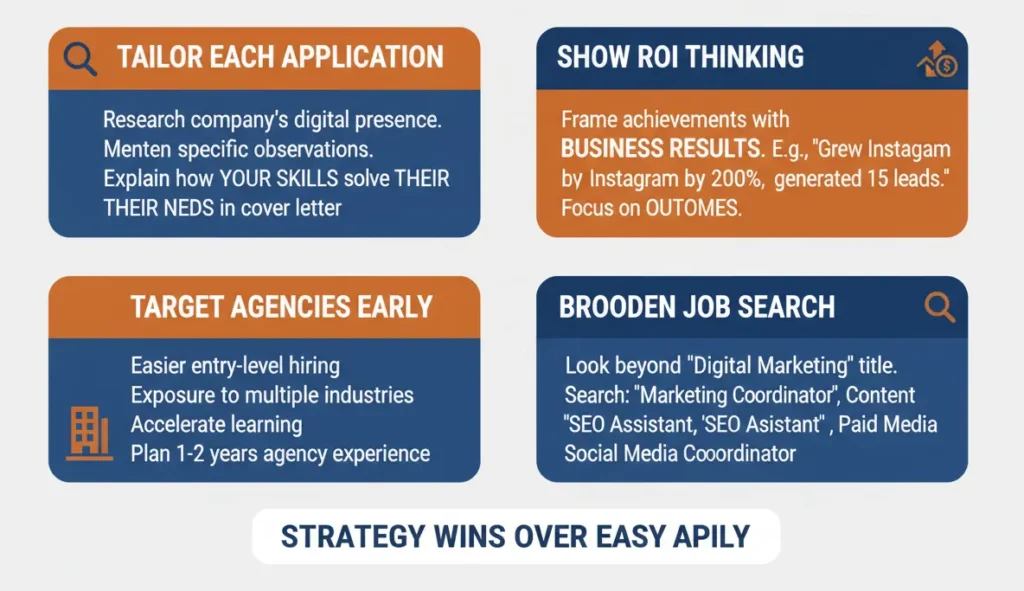
Applying to digital marketing roles requires more strategy than clicking “Easy Apply” on LinkedIn.
Customize every application. Research the company’s current digital marketing efforts. What channels are they active on? What’s working well? Where do you see opportunities? Reference specific observations in your cover letter and explain how your skills address their needs.
Demonstrate ROI thinking from day one. Even without professional experience, frame your achievements in business terms. Instead of “managed social media account,” say “grew Instagram following by 200% in 3 months, generating 15 qualified leads.” Employers care about results, not activities.
Apply to agencies first. Marketing agencies often hire entry-level talent more readily than in-house positions because they can bill your time to clients while you learn. Agency experience also exposes you to multiple industries and campaigns, accelerating your learning. Plan to spend 1-2 years at an agency before moving in-house for better work-life balance.
Look beyond “digital marketing” job titles. Search for roles like Marketing Coordinator, Content Specialist, SEO Assistant, Paid Media Specialist, or Social Media Coordinator. These positions often require similar skills but attract fewer applicants.
The Timeline: What to Expect
Breaking into digital marketing typically takes 3-6 months of focused effort if you’re starting from zero. Expect to spend 2-3 months building foundational knowledge and portfolio projects, followed by 1-3 months of active job searching and interviewing.
This timeline assumes you’re dedicating 15-20 hours weekly to learning and building. If you can invest more time, you’ll see results faster. If you’re transitioning while working full-time, give yourself 6-9 months and be patient with the process.
Your Action Plan for This Week
Stop planning and start doing. Here’s what to accomplish in the next seven days:
Choose your specialization and sign up for two relevant free certifications. Create or optimize your LinkedIn profile with digital marketing keywords. Brainstorm three potential portfolio project ideas and select one to launch. Research five agencies or companies in your area that hire entry-level marketers. Join two digital marketing communities and introduce yourself.
Breaking into digital marketing in 2026 doesn’t require connections, expensive education, or years of unrelated experience. It requires strategic focus, documented results, and consistent effort. The industry needs talented marketers who can demonstrate value—start building that proof today, and you’ll land your first role sooner than you think.