
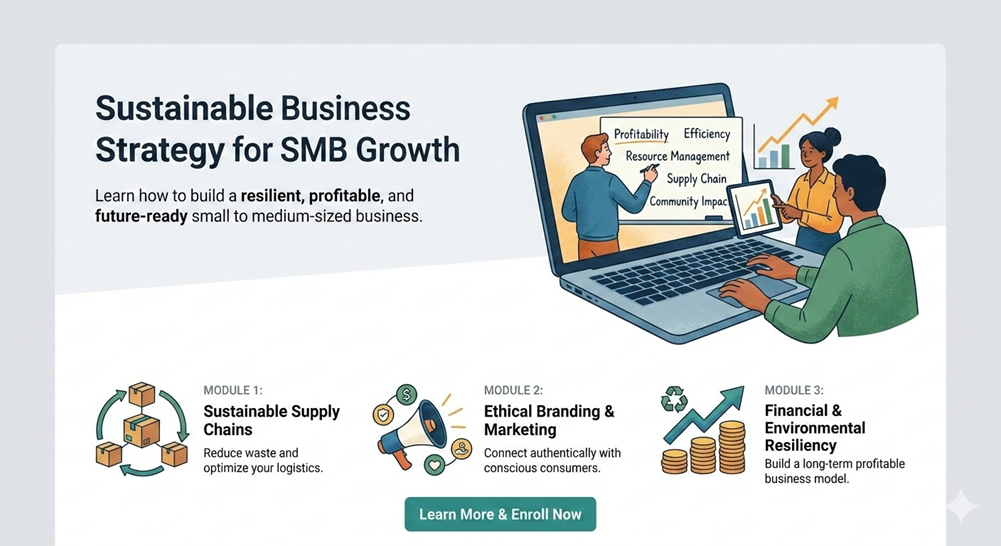
Find the best sustainable business strategy online course for SMBs. Compare platforms, certifications, and frameworks to build profitable long-term growth.
Table of Contents
For busy founders and marketers, here are the key insights:
- A sustainable business strategy online course teaches how to align profitability with environmental and social responsibility.
- Platforms like Coursera, Harvard Business School Online, edX, and LinkedIn Learning offer practical sustainability frameworks.
- According to McKinsey & Company (2023), companies with strong ESG performance outperform competitors financially.
- Sustainability improves brand trust, operational efficiency, and long-term revenue stability.
- Learning ESG measurement and circular economy models helps SMBs compete with larger companies.
- Certifications like B Corp and ISO 14001 strengthen credibility and attract customers who value responsible businesses.
Introduction
Many small businesses struggle to grow because their strategy focuses only on short-term sales rather than long-term value. That approach often leads to unstable growth, rising acquisition costs, and declining customer loyalty.
A sustainable business strategy online course helps solve this problem by teaching founders and marketing teams how to build businesses that are profitable, resilient, and aligned with modern consumer expectations.
In this guide, you will learn:
- The best online courses for learning sustainable business strategy
- What successful sustainability programs teach
- How companies measure environmental, social, and governance (ESG) impact
- Why sustainability improves long-term business performance
The goal is simple: help SMBs turn sustainability into a competitive advantage rather than just a marketing slogan.
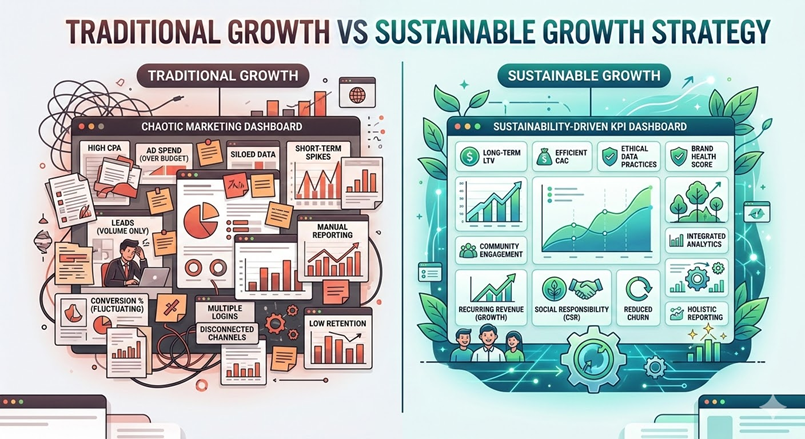
Why SMBs Need a Sustainable Business Strategy Online Course
Consumer expectations are changing rapidly. Buyers now expect brands to demonstrate responsibility, transparency, and long-term thinking.
According to the Nielsen Global Sustainability Report (2023), 73% of consumers say they would change purchasing habits to reduce environmental impact.
For businesses struggling to sell online, this shift matters because sustainability directly affects:
- Brand trust
- Conversion rates
- Customer retention
- Long-term profitability
However, most small businesses lack the knowledge needed to implement sustainable frameworks effectively.
That is where structured training becomes valuable.
The Knowledge Gap Facing Small Businesses
Sustainability strategy requires understanding multiple areas, including:
- Environmental impact measurement
- Ethical supply chains
- ESG reporting frameworks
- Circular economy business models
Without training, many founders rely on fragmented information from blogs or social media.
A structured sustainable business strategy online course organizes these concepts into a clear implementation roadmap.
The Financial Case for Sustainability
Sustainability is not only about environmental responsibility. It also improves financial performance.
Research from McKinsey & Company (2023) found that companies with strong ESG performance generate 3–5% higher annual returns compared to competitors.
Additional research shows:
- Purpose-driven brands grow twice as fast as competitors (Harvard Business Review, 2019).
- Sustainability initiatives can reduce operating costs by 10–30% through efficiency improvements (U.S. Department of Energy, 2023).
- Consumers are more likely to trust brands that communicate clear sustainability commitments (Edelman Trust Barometer, 2023).
For SMBs, this translates into higher customer loyalty and stronger long-term growth.
Internal Link Suggestion
How to Build a Business Growth Plan for Your Online Business →/business-growth-plan/
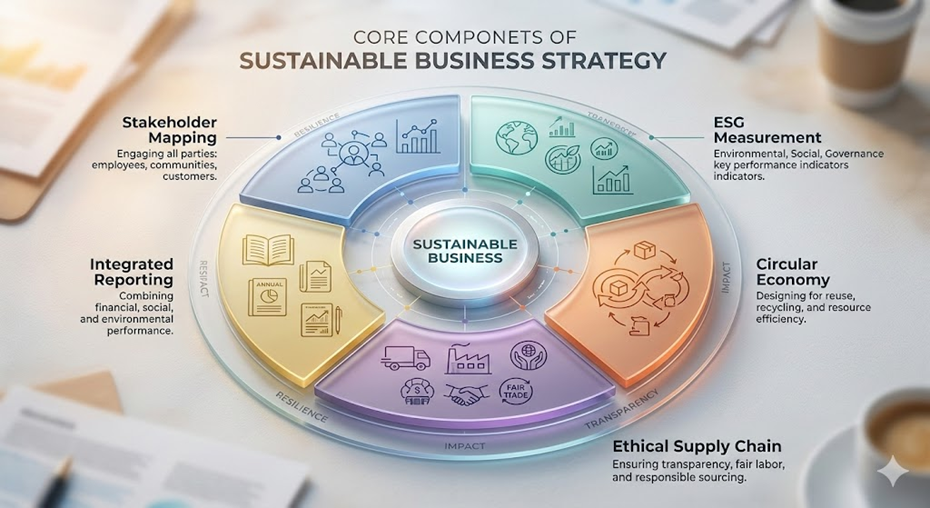
Core Components of a Successful Sustainable Business Strategy
Before choosing a course, it is important to understand what a complete sustainability strategy includes.
The best programs teach several core components.
Stakeholder Mapping
Stakeholder mapping identifies the people affected by your business.
Examples include:
- Customers
- Employees
- Suppliers
- Investors
- Local communities
Understanding these relationships helps businesses design strategies that create shared value rather than short-term profit only.
ESG Goal Setting and Measurement
Environmental, Social, and Governance metrics are essential for sustainability.
Common ESG indicators include:
- Carbon emissions
- Energy consumption
- Supplier ethics compliance
- Employee satisfaction
Tracking these metrics allows businesses to measure progress and communicate credibility.
Circular Economy Principles
Traditional business models follow a take-make-waste system.
The circular economy replaces this with models that emphasize:
- reuse
- recycling
- product longevity
- waste reduction
Many sustainability courses teach founders how to design products and services that operate within circular systems.
Transparent Supply Chains
Customers increasingly want to know where products come from and how they are produced.
Transparent supply chains involve:
- auditing suppliers
- verifying labor standards
- documenting environmental impact
Transparency builds customer trust and regulatory compliance.
Best Online Courses for Learning Sustainable Business Strategy
Not all sustainability courses provide equal value.
The following programs are widely respected for combining academic research with practical business frameworks.
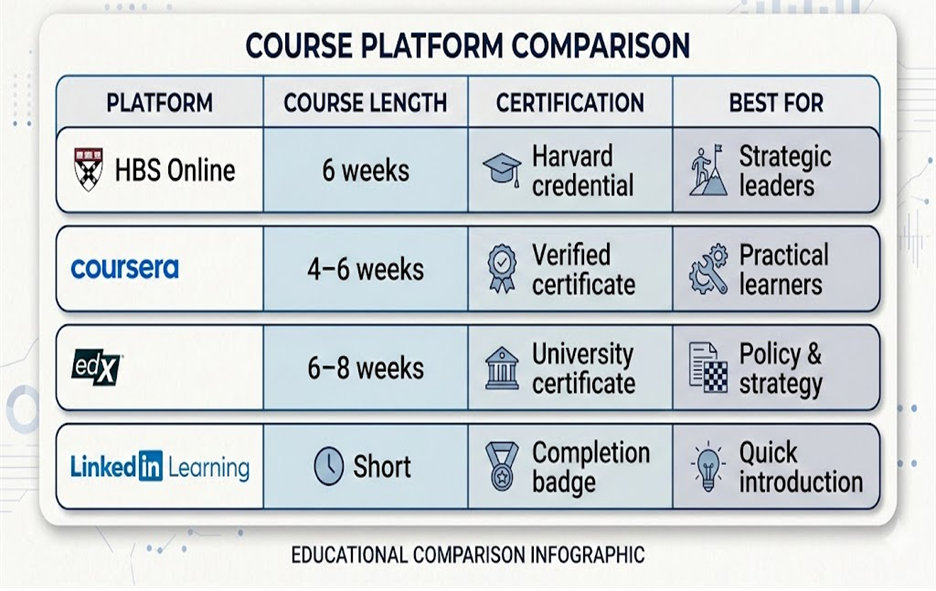
Harvard Business School Online – Sustainable Business Strategy
One of the most comprehensive sustainability programs available.
The course focuses on:
- competitive advantage through sustainability
- strategic decision frameworks
- case studies from global companies
Duration: 6 weeks
Certification: Harvard Business School Online credential
Best suited for founders who want advanced strategic training.
Coursera – Business Sustainability in the Circular Economy
Offered by Erasmus University Rotterdam, this course emphasizes practical sustainability implementation.
Key topics include:
- lifecycle assessment
- circular business models
- operational sustainability metrics
Cost: free to audit
Certificate: paid option available
Ideal for SMB founders seeking practical operational strategies.
edX – Sustainable Business: Big Issues, Big Changes
This program from the University of Edinburgh focuses on global sustainability challenges and corporate response strategies.
Topics include:
- climate policy
- corporate sustainability frameworks
- ESG integration
Duration: 8 weeks.
LinkedIn Learning – Sustainability Foundations
A shorter course designed for professionals who want a quick overview.
Lessons include:
- ESG fundamentals
- sustainability reporting
- stakeholder communication
This program works well as an introductory course for business owners new to sustainability.
Top Platforms Offering Sustainable Business Strategy Courses with Certification
When choosing a course platform, consider credibility, curriculum depth, and certification value.
Coursera
- University partnerships with Yale, Michigan, and Erasmus
- wide selection of sustainability programs
- affordable certification options
edX
- strong academic reputation
- courses from leading universities
- advanced programs available
Harvard Business School Online
- premium pricing but high prestige
- recognized globally by employers and investors
LinkedIn Learning
- fast skill development
- courses designed for professionals
Internal Link Suggestion
How to Choose the Right Online Course for Your Business Growth →
Benefits of Integrating Sustainability into Corporate Operations
Sustainability creates several measurable advantages for small businesses.
Reduced Operational Costs
Energy efficiency improvements alone can reduce costs by 10–30% (U.S. Department of Energy, 2023).
Examples include:
- renewable hosting infrastructure
- efficient logistics
- reduced packaging waste
These changes lower costs while improving environmental performance.
Stronger Brand Trust
Consumers increasingly support brands that reflect their values.
According to the Edelman Trust Barometer (2023), 63% of consumers buy from brands based on shared values.
Authentic sustainability initiatives strengthen brand loyalty and improve retention.
Talent Attraction
The Deloitte Global Millennial Survey (2023) found that 49% of millennials consider a company’s environmental impact when choosing employers.
Businesses with strong sustainability commitments therefore gain an advantage when recruiting skilled employees.
How Companies Measure Their Environmental, Social, and Governance Impact
A key concept taught in any sustainable business strategy online course is ESG measurement.
Environmental Metrics
Typical environmental indicators include:
- greenhouse gas emissions
- renewable energy usage
- waste generation levels
These metrics track the environmental footprint of operations.
Social Metrics
Social indicators measure impact on employees and communities.
Examples include:
- employee retention rate
- diversity representation
- workplace safety performance
Governance Metrics
Governance metrics ensure responsible management practices.
Examples include:
- leadership transparency
- anti-corruption policies
- financial reporting standards
Businesses typically track 5–10 ESG metrics and monitor them quarterly.
📊 Visual Suggestion
Insert ESG dashboard graphic showing:
- Environmental KPIs
- Social KPIs
- Governance KPIs
Difference Between CSR and ESG Frameworks
Many businesses confuse Corporate Social Responsibility with ESG frameworks.
Understanding the difference is essential for strategic planning.
Corporate Social Responsibility (CSR)
CSR focuses on voluntary initiatives such as:
- charitable donations
- community support programs
- employee volunteer initiatives
These activities improve brand reputation but may not affect core operations.
Environmental, Social, and Governance (ESG)
ESG focuses on measurable performance indicators.
Unlike CSR, ESG includes:
- standardized reporting
- data-driven evaluation
- financial performance integration
Investors increasingly rely on ESG data when evaluating companies.
▶ YouTube Video Suggestion
Embed video:
“What Is ESG and Why It Matters for Business”
Recommended source: GreenBiz or Harvard Business School Online.
Advanced Strategy
Businesses that complete a sustainable business strategy online course can apply advanced frameworks to accelerate growth.
ESG Attribution Models
Companies can track which sustainability initiatives deliver the greatest impact.
Examples include measuring:
- cost reductions
- customer acquisition improvements
- retention increases
This approach ensures sustainability investments deliver measurable ROI.
Predictive Analytics
Predictive models analyze sustainability data to forecast future trends.
Businesses can use predictive analytics to:
- anticipate regulatory changes
- forecast energy costs
- identify operational risks
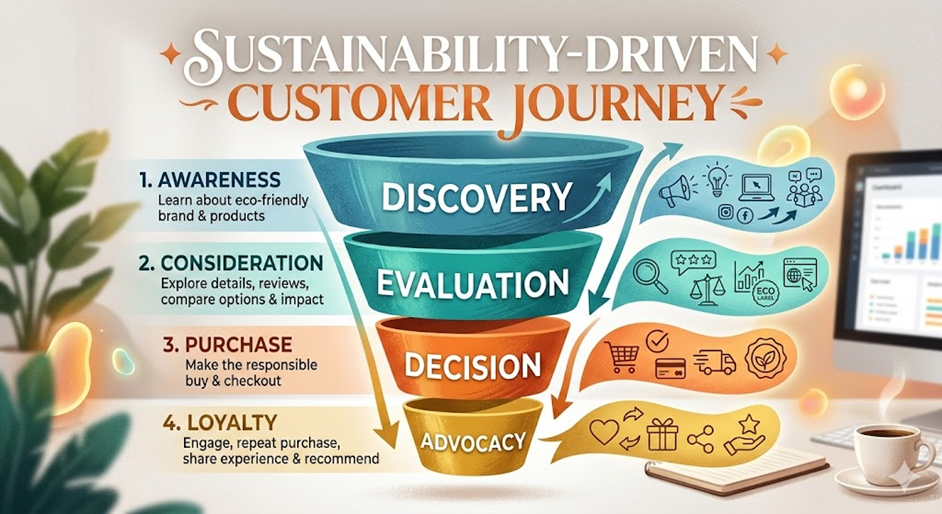
Marketing Automation for Sustainability
Sustainability messaging can also improve marketing performance.
Examples include:
- automated sustainability newsletters
- ESG impact reports for customers
- sustainability-focused product campaigns
Customers who engage with sustainability messaging often show higher lifetime value.
References
McKinsey & Company – Sustainability and Financial Performance (2023)
Nielsen Global Sustainability Report (2023)
U.S. Department of Energy – Business Energy Efficiency (2023)
Harvard Business School Online – Sustainable Business Strategy Course
Conclusion
A sustainable business strategy online course provides the frameworks, tools, and insights needed to build businesses that grow responsibly and profitably.
For small and medium businesses struggling to scale, sustainability offers a powerful opportunity to differentiate their brand and improve long-term resilience.
Companies that combine sustainability with data-driven decision making gain advantages in customer loyalty, operational efficiency, and investor trust.
The most important step is to start learning and implementing these frameworks today.
🚀 Call to Action
Start exploring the best sustainable business strategy online courses today and begin building a growth strategy that aligns profitability with long-term impact.
About the Author

Empicon helps small and medium businesses build data-driven online growth strategies, scalable marketing systems, and sustainable business models.